 “And he came to Nazareth, where he had been brought up, and according to his custom went into the synagogue on the Sabbath day and stood up to read.” Luke 4:16
Answer: It was Jesus' custom to go to church on the Sabbath.
 ”...but on the seventh day is the Sabbath of the LORD your God.” Exodus 20:10 “And very early on the first day of the week, as the sun was rising, they came to the tomb.” Mark 16:1.2
Answer: The Sabbath is not the first day of the week (Sunday), as many assume, but the seventh day (Saturday). Note the text above, which makes it clear that the Sabbath comes exactly before the first day of the week.
 “In the beginning God created the heavens and the earth.” “And on the seventh day God finished his work which he had made; and he rested on the seventh day from all his work which he had made. And God blessed the seventh day and sanctified it, because in it he rested from all his work which God created when he made it.“ Genesis 1:1; 2:2.3
Answer: God instituted the Sabbath at the creation of the world. He rested on the Sabbath day, blessed it and sanctified it (set it apart for a holy purpose).
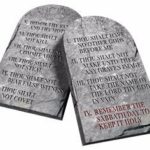 “Remember the Sabbath day and keep it holy. Six days you shall labour and do all your work, but on the seventh day is the Sabbath of the LORD your God; you shall do no work there, neither you, nor your son, nor your daughter, nor your manservant, nor your maidservant, nor your cattle, nor your stranger who lives within your gates. For in six days the LORD made heaven and earth and the sea and all that is in them, and He rested on the seventh day; therefore the LORD blessed the Sabbath day and hallowed it.” Exodus 20:8 -11 “Then the LORD gave me the two tablets of stone inscribed with the finger of God...” Deuteronomy 9:10
Answer: In the fourth of the ten commandments, God commands us to keep the seventh-day Sabbath as his holy day. He knew that his Sabbath would be forgotten by mankind, which is why this commandment begins with the words “remember”. Never and nowhere did he command anyone to keep any other day as a weekly holy day.
 Jesus says: “But it is easier for heaven and earth to pass away than for one stroke of the law to fall.” Luke 16:17 God says: “...but I will not withdraw my favour from him, nor deny my faithfulness.” Psalms 89:34 Remember that the Ten Commandments came from his mouth. Exodus 20:1 says: “And God spoke all these words and said... (followed by the Ten Commandments in verses 2-17).”
Answer: No, really not! It is absolutely impossible for any of God's commandments to ever be changed. All Ten Commandments are still binding today.
 “But Paul went in to them according to his custom and spoke to them on three Sabbaths on the basis of the Scriptures...” Acts 17:2 “But Paul and his companions travelled on from Perga... and on the Sabbath day they went into the synagogue and sat down.” Acts 13:13.14 “And on the Sabbath day we went out of the city to the river where they used to pray, and we sat down and spoke to the women who had come together.” Acts 16:13 “And every sabbath day he held sermons in the synagogue, and persuaded both Jews and Greeks.” Acts 18:4
Answer: Yes, the book of Acts clearly states that Paul and the early church kept the Sabbath.
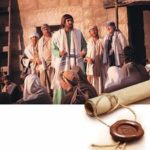 God commanded: “Blessed is the man who... keeps the Sabbath so as not to profane it, and keeps his hand from doing any evil! ” “And the strangers who join themselves to the LORD... and all who take heed not to profane the Sabbath, and who keep my covenant, I will bring them to my holy mountain and make them happy in my house of prayer. a house of prayer for all peoples be called” Isaiah 56:2.6.7
The apostles taught:
“But when the Jews had gone out of the synagogue, the Gentiles asked that these words be proclaimed to them [also] on the next Sabbath.” “And on the following Sabbath almost the whole city gathered together to hear the word of God.” Acts 13:42.44 “And every Sabbath he held sermons in the synagogue and persuaded Jews and Greeks.” Acts 18:4
Answer: In the early New Testament church, the apostles not only observed God's Sabbath commandment, but also taught the converted Gentiles to come together to worship God on the Sabbath. Not once do they mention Sunday as a holy day.
Answer: No, there is not the slightest indication that the Sabbath was changed at Jesus' death or resurrection. The Bible teaches exactly the opposite. Please consider the following facts:
A. God blessed the Sabbath.
“...therefore the LORD blessed the Sabbath day and hallowed it.” Exodus 20:11 “And God blessed the seventh day and hallowed it.” Genesis 2:3
B. Jesus expected his people to keep the Sabbath in 70 AD when Jerusalem was destroyed.
Jesus knew that Jerusalem would be destroyed by the Romans in 70 AD and warned his followers in advance with the words: “But pray that your flight may not be in winter. still on the Sabbath happens.” Matthew 24:20 Jesus was making it clear that he expected the Sabbath to be kept 40 years after his resurrection. In fact, there is not the slightest hint anywhere in Scripture that Jesus, His Father or the apostles (at any time and under any circumstances) ever moved the holy seventh-day Sabbath to any other day.
C. The women who came to anoint the body of Jesus kept the Sabbath. Jesus died on the “preparation day, which is the pre-Sabbath” (Mark 15:37, 42), which we call Good Friday today.
The women had prepared spices and ointments to anoint the body of Jesus, ... “but on the Sabbath they rested according to the law.” Luke 23:56 Only “when the Sabbath had passed” (Mark 16:1) did they come to the tomb ”on the first day of the week“ (Mark 16:2) to continue their sad work. Then they learnt that Jesus had risen on the ”first day of the week“ (verse 9), commonly known as Easter Sunday. Note that the Sabbath ”according to the law" was the day before Easter Sunday, which we now call Saturday.
D. Luke, a follower of Jesus, wrote two of the biblical books - the Gospel of Luke and the Acts of the Apostles.
He says that he wrote down “everything” that Jesus had done and taught (Acts 1:1-3). But nowhere did he mention Sunday sanctification or a change to the Sabbath.
 “For as the new heavens and the new earth which I make shall remain before my face, says the LORD, so shall your seed and your name remain. And it shall come to pass that on every new moon and on every Sabbath all flesh shall come together to worship before me, says the LORD.” Isaiah 66:22.23
Answer: Yes, the Bible says that the saved of all ages will keep the Sabbath on the new earth.
 “if you call the Sabbath your delight and the holy [day] of the LORD honourable; ... if you honour it” Isaiah 58:13 “For the Son of Man is Lord even of the Sabbath.” Matthew 12:8
Answer: In Revelation 1:10, the Bible speaks of the “day of the Lord”, which shows that God has a special day. But not a single text in Scripture calls Sunday the Lord's Day, whereas the Bible clearly identifies the Sabbath as the Lord's Day. The only day ever blessed by the Lord or called by Him as His holy day is the seventh-day Sabbath.
 “Or do you not know that all of us who were baptised into Christ Jesus were baptised into his death? So we were buried with him through baptism into death, that just as Christ was raised from the dead by the glory of the Father, even so we also should walk in newness of life. For if we have been made one with him and have become like him in his death, we shall also be like him in the resurrection, knowing this, that our old man was crucified with him, so that the body of sin might be put out of commission, that we should no longer serve sin.” Romans 6:3-6
Answer: No! Just as you do not keep Friday in remembrance of the crucifixion. Jesus instituted baptism in remembrance of his death, burial and resurrection. Nowhere does the Bible say that Sunday should be kept in remembrance of Jesus' resurrection (or for any other reason). We honour Christ by obeying him (John 14:15), not by substituting human demands for his demands.
 “And he will ... seek to change the times and the law.” Daniel 7:25 “... And so you have cancelled the commandment of God for the sake of your tradition.” “But in vain do they worship me, because they teach doctrines which are the commandments of men.” Matthew 15:6.9 “His priests do violence to my law.” “And his prophets cover them with whitewash... and say, “Thus says the LORD GOD,” when the LORD has not spoken it.” Ezekiel 22:26.28
Answer: A long time ago, misguided people proclaimed that God's holy day had been moved from the Sabbath to Sunday. God had predicted that this would happen - and so it did. This error was passed down to our unsuspecting generation as biblical fact. Sunday observance is a human tradition and a transgression of God's law, which commands the observance of the Sabbath. Only God can declare a day holy. God blessed the Sabbath, and what God blesses cannot be “overturned” or “cancelled” by anyone. Numbers 23:20
 “You shall not add to the word which I command you, nor shall you take from it, that you may keep the commandments of the LORD your God which I command you.” Deuteronomy 4:2 “All God's words are purified; he is a shield to those who trust in him. Do not add to his words, lest he punish you and you be found a liar.” Proverbs 30:5.6
Answer: God has expressly forbidden people to change his law by omitting or adding to it. It is one of the worst and most dangerous things to treat God's law lightly.
 A. A sign for creation.
“Remember the Sabbath day and keep it holy!” “For in six days the LORD made heaven and earth and the sea and all that is in them, and he rested on the seventh day; therefore the LORD blessed the Sabbath day and hallowed it.” Exodus 20:8.11
B. A sign of redemption and sanctification.
“I also gave them my sabbaths to be a sign between me and them, so that they would know that it is I, the LORD, who sanctify them.” Ezekiel 20:12
Answer: God gave the Sabbath as a twofold sign:
1 The Sabbath is the sign that God created the world in six literal 24-hour days.
2. it is also a sign of God's power to redeem and sanctify people.
Every Christian will therefore value the Sabbath as a precious sign of creation and redemption (Exodus 31:13.17 Ezekiel 20:12.20). It is an outrageous offence to God when people trample on His Sabbath. God says in Isaiah 58:13.14 that all who want to be blessed by Him must first stop trampling His Sabbath underfoot.
 “Everyone who commits sin also commits lawlessness, and sin is lawlessness.” 1 John 3:4 “For the wages of sin is death.” Romans 6:23 “For whoever keeps the whole law, but falls short in one, has become guilty in all.” James 2:10 “For to this you were called, because Christ also suffered for us, leaving us an example, that you should follow in his steps.” 1 Peter 2:21 “... and having come to perfection, he has become the author of eternal salvation to all who obey him.” Hebrews 5:9
Answer: It is a matter of life and death! Sabbath observance is embedded in God's law in the fourth commandment. Deliberately breaking any of the Ten Commandments is a sin. Christians will joyfully follow the example of Jesus in keeping the Sabbath. Our only safety is found in diligent Bible study “to rightly divide the word of truth.” 2 Timothy 2:15 All our Christian principles and actions must be explicitly biblically based.
 “His priests do violence to my law and profane my sanctuaries; they make no distinction between the holy and the unholy... and do not observe my Sabbaths; and I am desecrated among them.” “Then I poured out my wrath on them” Ezekiel 22:26.31
Answer: Religious leaders who close their eyes to God's true Sabbath are insulting the God of heaven. God threatens these false shepherds with punishment. Millions of people have been led astray in this matter. God cannot leave this unpunished. Jesus rebuked the Pharisees who pretended to love God, while by their tradition they declared one of the Ten Commandments to be invalid (Mark 7:7-13).
 “If you love me, keep my commandments.” John 14:15 “So then each of us will give an account of himself to God.” Romans 14:12 “Therefore to him who knows to do good and does not do it, to him it is sin.” James 4:17 “Blessed are those who do his commandments, that they may have right to the tree of life and may enter through the gates into the city.” Revelation 22:14 “Here is the steadfast endurance of the saints, here are those who keep the commandments of God and the faith of Jesus.” Revelation 14:12
Answer: Yes, indeed, the Sabbath is your Sabbath. God created it for you, and if you love it, you will keep it, because keeping the Sabbath holy is one of His commandments. Love without wanting to keep the commandments is not love (1 John 2:4). You have to make a decision. You cannot avoid it. No one can excuse you. You will have to give God yourself an answer to this extremely important question. God is calling you to love and obey Him!